Table of Contents
ToggleFortnite didn’t start as the cultural juggernaut we know today. What began as a troubled cooperative zombie defense game transformed into the most influential battle royale of the modern era, reshaping everything from game monetization to cross-platform play. The story of Fortnite’s origin is less about meticulous planning and more about bold pivots, rapid execution, and a willingness to cannibalize your own vision when the market demands it.
In September 2017, Epic Games released Fortnite Battle Royale as a free add-on to their struggling Save the World PvE mode. Within months, it eclipsed PlayerUnknown’s Battlegrounds, dominated Twitch, and pulled in celebrities who’d never touched a controller. By 2018, it wasn’t just a game, it was a social platform, a concert venue, and a $5 billion revenue machine. Understanding Fortnite’s origin means tracing a seven-year development cycle, a 60-day creative sprint, and the strategic gambles that turned Epic into one of gaming’s most powerful forces.
Key Takeaways
- Fortnite’s origin story demonstrates how a struggling seven-year PvE project pivoted into a genre-defining battle royale in just 60 days, reshaping the gaming industry.
- The building mechanic inherited from Save the World became Fortnite’s defining differentiator, adding skill expression and spatial depth that set it apart from competitors like PUBG.
- Epic’s free-to-play strategy and cosmetic-only monetization model generated $5.4 billion in revenue by 2018, proving that player engagement and self-expression drive revenue more effectively than pay-to-win systems.
- Cross-platform play at scale eliminated friction between PC, console, and mobile devices, making Fortnite a truly ubiquitous social platform that transcended traditional gaming boundaries.
- Fortnite’s seasonal content model, Battle Pass innovation, and live events became industry standards, reshaping how modern multiplayer games maintain engagement and monetization.
- Owning Unreal Engine provided Epic with a critical technical advantage, enabling weekly updates, rapid iteration, and cross-platform optimization that competitors couldn’t match.
The Unlikely Beginning: Fortnite’s Original Vision
Save the World Mode: The Foundation Nobody Expected
Fortnite wasn’t conceived as a battle royale. The original pitch centered on Save the World, a cooperative PvE mode blending tower defense mechanics with third-person shooting and base-building. Players would gather resources during the day, construct elaborate fortifications, and defend against waves of zombie-like Husks at night.
Epic announced Save the World in 2011, riding the wave of crafting-survival games like Minecraft. The core loop, scavenge, build, defend, had promise, but the execution struggled. The building mechanics felt clunky, progression systems were confusing, and the monetization leaned heavily on loot boxes and gacha-style hero collection.
By 2017, Save the World had been in development for six years with little to show publicly beyond a handful of alpha tests. Industry watchers questioned whether Epic could ship a coherent product, let alone a hit.
Development Struggles and the Seven-Year Journey
Fortnite’s development was anything but smooth. Epic cycled through multiple creative directors, rebooted art styles, and overhauled systems repeatedly. Early builds leaned toward realistic graphics before pivoting to the cartoonish aesthetic that became iconic.
The studio’s internal culture valued iteration, but that came at a cost. Resources poured into Save the World for seven years while competitors moved faster. Meanwhile, games like Overwatch and Destiny proved players craved tight, replayable multiplayer loops over sprawling PvE campaigns.
By mid-2017, Save the World entered paid early access, but reception was lukewarm. Critics praised the building mechanics but found the progression grindy and the monetization aggressive. Epic faced a hard truth: their flagship project wasn’t working. That realization set the stage for one of gaming’s most dramatic pivots.
The Battle Royale Pivot That Changed Everything
PUBG’s Influence and Epic’s Strategic Response
In March 2017, PlayerUnknown’s Battlegrounds exploded on Steam Early Access. Within months, it dominated sales charts and Twitch viewership, proving battle royale had mainstream appeal beyond niche mods. PUBG’s success wasn’t lost on Epic leadership.
Epic had a unique advantage: they owned Unreal Engine 4, the same engine PUBG ran on. They’d seen PUBG’s technical struggles, server instability, optimization issues, clunky controls. Epic believed they could build a better battle royale using their existing Fortnite assets and engine expertise, many industry observers followed the rapid development closely as it unfolded.
The decision to pivot was controversial. Some team members worried it would dilute Save the World’s already troubled development. Others saw it as creative opportunism. Epic’s leadership, led by CEO Tim Sweeney, greenlit the battle royale mode as a limited-time experiment.
Building Mechanics: The Defining Differentiator
Fortnite Battle Royale inherited Save the World’s building system, and that single feature became its identity. While PUBG players fought over fixed cover, Fortnite players created their own. Harvesting materials (wood, brick, metal) and constructing walls, ramps, and towers mid-combat introduced skill expression that purely gunplay-focused BRs couldn’t match.
Building raised the skill ceiling dramatically. New players could spam walls for basic defense, but high-level play involved edit resets, 90-degree turns, and ramp rushes executed in seconds. The mechanic was polarizing, some loved the creative chaos, others found it overwhelming, but it made Fortnite unmistakably distinct.
Epic refined building throughout development, adjusting material caps, harvest rates, and structure health. By launch, the system felt responsive enough for fast combat while maintaining strategic depth. It transformed battle royale from pure shooting gallery to dynamic spatial chess.
The Rapid 60-Day Development Sprint
Epic’s battle royale mode went from concept to playable build in roughly two months. A small team pulled assets from Save the World, character models, weapons, building mechanics, and adapted them for 100-player PvP matches.
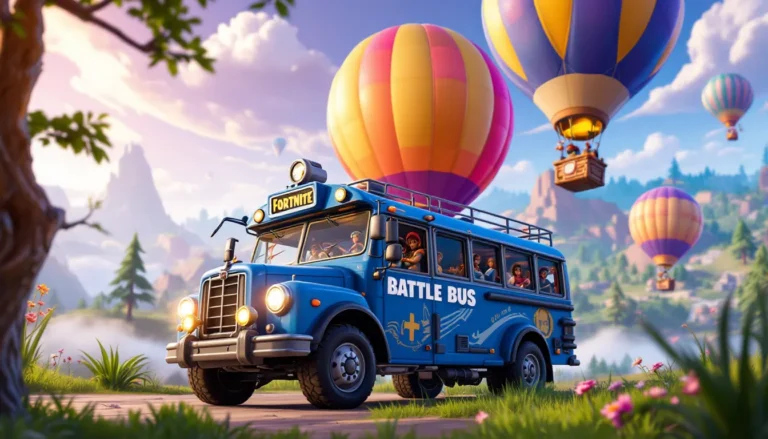
The development sprint was intense. Engineers optimized netcode for massive player counts, designers tweaked storm circle timings, and artists created the Battle Bus drop system that became iconic. Epic leveraged their Unreal Engine mastery to iterate faster than competitors constrained by licensed tech.
By September 2017, Fortnite Battle Royale was ready for public testing. It launched as a free add-on to Save the World’s paid early access, positioned as a bonus mode rather than the main attraction. That positioning wouldn’t last long.
September 2017: Launch and Initial Reception
Free-to-Play Strategy: A Calculated Gamble
Epic made Fortnite Battle Royale completely free-to-play on September 26, 2017, even though Save the World required a $40 purchase. The decision was bold: PUBG charged $30 and still dominated, proving players would pay for quality BRs.
But Epic understood momentum. Free-to-play eliminated friction, allowing curious players to drop in without financial commitment. The model also aligned with Epic’s long-term vision for cosmetic monetization, which they’d refined in games like Paragon.
The gamble paid off immediately. Within two weeks, Fortnite hit 10 million players. By December, it reached 30 million. The free barrier-to-entry created viral growth PUBG couldn’t match, even though its first-mover advantage, as experts at outlets like GameSpot documented in real-time coverage.
Early Player Response and Twitch Integration
Streamers embraced Fortnite Battle Royale almost instantly. The cartoonish art style was more advertiser-friendly than PUBG’s military realism, and building mechanics created highlight-reel moments that drove viewer engagement.
Ninja, then a mid-tier streamer known for Halo, went all-in on Fortnite in late 2017. His aggressive playstyle and mastery of building mechanics attracted massive audiences. Other top streamers followed: DrLupo, TimTheTatman, and Myth built careers on Fortnite content.
Twitch viewership skyrocketed. By early 2018, Fortnite regularly topped the platform’s most-watched games, occasionally surpassing League of Legends. Epic smartly courted streamers with early access to cosmetics and participated in charity events that generated positive press.
The Cultural Explosion: From Game to Global Phenomenon
Celebrity Endorsements and Mainstream Breakthrough
Fortnite transcended gaming in early 2018 when mainstream celebrities started playing publicly. Drake joined Ninja for a stream in March 2018, breaking Twitch’s concurrent viewer record with over 600,000 watching live. Travis Scott, Marshmello, and NFL players openly discussed their Fortnite habits.
These weren’t paid partnerships initially, celebrities genuinely enjoyed the game. Fortnite’s accessible mechanics and social features made it a hangout space, not just a competitive arena. Parents played with kids, friends coordinated cross-country squad fills, and the cultural stigma around gaming softened.
Major media outlets ran features positioning Fortnite as a cultural moment, not just a game. The New York Times, ESPN, and Ellen DeGeneres all covered the phenomenon. Epic capitalized by hosting in-game events featuring these celebrities, blurring lines between game and social platform, a development tracked by esports coverage at Dexerto.
Dance Emotes and Pop Culture Integration
Fortnite’s emotes, particularly dance animations, became cultural currency. The Floss, Electro Shuffle, and Take the L spread beyond the game into schoolyards, sports celebrations, and social media challenges. Professional athletes performed Fortnite dances after touchdowns, free throws, and goals.
Epic sourced emotes from viral trends, classic pop culture, and original animations. Some, like the Carlton dance, sparked legal controversies over intellectual property. But the legal gray area didn’t slow adoption, emotes gave players a way to express personality and taunt opponents in universally recognizable ways, spreading awareness about concepts like hidden gameplay strategies players could leverage.
The dances became memes, further amplifying Fortnite’s reach. Parents who’d never touched a controller recognized Fortnite emotes. The game wasn’t just played, it was performed, shared, and remixed into global pop culture.
Cross-Platform Play: Breaking Down Gaming Barriers
Fortnite pioneered true cross-platform play at scale. In 2018, Epic enabled full crossplay between PC, Xbox, PlayStation, Switch, and mobile, allowing friends on any device to squad up together.
This was technically impressive and politically complicated. Sony initially resisted PlayStation crossplay, locking PS4 players into their ecosystem. Epic and player backlash eventually forced Sony to relent in September 2018, setting a precedent for the industry.
Crossplay expanded Fortnite’s addressable audience exponentially. A kid on Switch could play with their PC-gaming sibling and their dad on Xbox. Mobile players could grind Battle Pass challenges on the bus, then switch to console for serious sessions. The friction between platforms evaporated, making Fortnite a truly ubiquitous social space.
The Business Model That Redefined Gaming Revenue
Battle Pass Innovation and Seasonal Content
Fortnite’s Battle Pass launched in Season 2 (December 2017) and revolutionized free-to-play monetization. For $9.50, players unlocked a progression track with 100 tiers of cosmetics, V-Bucks, and exclusive rewards. Complete enough challenges, and you’d earn enough V-Bucks to buy next season’s pass, essentially paying once for perpetual access.
The model was brilliant. It encouraged daily engagement through limited-time challenges, created FOMO around exclusive skins, and converted free players into paying customers at a low barrier-to-entry price. Unlike loot boxes, players knew exactly what they’d get.
Seasonal content kept the game fresh. Every 10 weeks, Epic introduced new map changes, weapons, mechanics, and narrative threads. The cadence trained players to return regularly, treating Fortnite like a live service rather than a static product.
Cosmetic-Only Monetization Success
Fortnite never sold power. Every purchasable item was purely cosmetic, skins, emotes, pickaxes, gliders, wraps. This preserved competitive integrity while still generating absurd revenue through FOMO and self-expression.
Rare skins like Renegade Raider (Season 1 exclusive) became status symbols. Limited-time collaborations with Marvel, DC, Star Wars, and NFL commanded premium prices. The Item Shop rotated daily, creating urgency around purchases.
By 2018, Fortnite generated $5.4 billion in revenue, mostly from cosmetics. Epic proved free-to-play games didn’t need pay-to-win mechanics to print money, they just needed content players wanted to showcase, much like collaborative crossover content that attracted diverse fanbases.
Technical Innovation and the Unreal Engine Advantage
Epic’s In-House Technology Edge
Owning Unreal Engine gave Epic a massive technical advantage. While competitors wrestled with licensed engines and third-party tools, Epic could modify Unreal’s source code on the fly to optimize Fortnite’s performance.
The engine’s flexibility enabled rapid iteration. Epic pushed weekly updates, new weapons, map tweaks, bug fixes, without the certification delays that plagued other live-service games. This pace kept Fortnite feeling fresh and responsive to community feedback.
Unreal Engine’s scalability also supported Fortnite’s cross-platform ambitions. The same codebase ran on high-end PCs, aging consoles, and mobile devices with minimal compromises. Epic’s engine expertise let them maintain visual consistency and gameplay parity across wildly different hardware.
Live Events and Map Evolution System
Fortnite’s live events redefined what multiplayer games could achieve. The Rocket Launch (June 2018) drew players into a shared moment where a missile ripped through the sky, creating dimensional rifts. No instanced cutscenes, everyone experienced it simultaneously in real-time.
Subsequent events grew more ambitious: meteors destroying Tilted Towers, Galactus attacking the map, Travis Scott’s Astronomical concert attracting 12.3 million concurrent viewers. These weren’t pre-rendered cinematics but interactive spectacles rendered in-engine, with advanced techniques for cosmetic collaborations like the Fortnite Nike partnership blending real-world brands into the virtual space.
The map evolved seasonally through both dramatic events and gradual changes. Loot Lake became a floating island. The Zero Point created the Nexus. Tilted Towers was destroyed and rebuilt multiple times. Players logged in each update curious what had changed, treating map exploration like detective work.
Legacy and Long-Term Impact on the Gaming Industry
Competitive Esports Scene and World Cup Events
Epic launched Fortnite’s competitive scene in 2018 with the Summer Skirmish series, offering $8 million in prize pools. The 2019 Fortnite World Cup elevated stakes further: a $30 million tournament held at Arthur Ashe Stadium in New York City.
16-year-old Kyle “Bugha” Giersdorf won the solo championship and $3 million, becoming an overnight celebrity. The event drew 2.3 million concurrent viewers on streaming platforms, demonstrating Fortnite’s esports viability even though critics claiming building mechanics were too chaotic for competitive integrity.
Fortnite’s esports approach differed from traditional titles. Instead of franchise leagues, Epic hosted open qualifiers where anyone could compete for life-changing money. This democratized access but created consistency issues, meta shifts and controversial items like the Infinity Blade disrupted competitive balance.
Influence on Modern Game Development Trends
Fortnite’s success reshaped industry priorities. Major publishers rushed battle royale modes into existing franchises: Call of Duty added Warzone, Battlefield introduced Firestorm, Apex Legends launched as a Titanfall spin-off.
The Battle Pass model spread everywhere. Rocket League, Dota 2, Apex, and countless others adopted seasonal progression systems with tiered rewards. The template proved so lucrative that even premium games like Halo Infinite implemented it, often for training modes similar to The Pit’s skill-building approach.
Fortnite also normalized constant content updates. Gamers now expect live-service titles to evolve weekly, not quarterly. The seasonal model, crossover collaborations, and in-game events became industry standards. Epic didn’t just make a hit game, they established the operational blueprint competitors still follow, an evolution that eventually led to nostalgia-driven content like Fortnite Season OG celebrating the game’s roots.
Conclusion
Fortnite’s origin story isn’t about perfect planning, it’s about recognizing opportunities and executing faster than anyone thought possible. A struggling PvE game pivoted into a genre-defining battle royale in 60 days, then scaled into a cultural platform that transcended gaming itself.
Epic’s willingness to cannibalize Save the World, embrace free-to-play when competitors charged premium prices, and push technical boundaries with crossplay and live events created a blueprint that reshaped the industry. The building mechanics differentiated gameplay, the Battle Pass monetized engagement without selling power, and the seasonal content model kept millions returning for years.
Today, Fortnite remains a top earner and cultural touchstone, hosting concerts, movie promotions, and social hangouts as much as competitive matches. Its origin as a bold pivot from a troubled project proves that in gaming, speed and adaptability often matter more than years of careful planning. Epic didn’t just create a hit, they rewrote the rules of what multiplayer games could become.